The most important questions to ask your rhinoplasty surgeon help you understand the surgeon’s experience, their aesthetic approach, and what you can realistically expect from your results. Once you know what to look for, you’ll feel far more confident heading into your consultation and making decisions about surgery.
As a double board-certified plastic surgeon specializing in rhinoplasty, I welcome thoughtful questions. They help clarify your goals and allow me to explain how I tailor each procedure to your anatomy, facial balance, and breathing function.
Surgeon Experience & Rhinoplasty Expertise
Main question to ask: What experience do you have with primary rhinoplasty?
Why this is important: Experience is essential because rhinoplasty is among the most complex procedures in plastic surgery. A surgeon who frequently performs this operation and consistently achieves natural-looking results is better equipped to understand the nuances of nasal anatomy and the artistry required to reshape it.
When you ask about experience, consider the following:
- How many rhinoplasties the surgeon performs each year
- Whether they regularly treat a variety of nasal shapes and skin types
- The consistency and style reflected in their before-and-after photos
These details help you see whether the surgeon’s skill and aesthetic sensibility align with what you hope to achieve.
Before-and-After Photos
Main question to ask: Can I see before-and-after photos?
Why this is important: Before-and-after photos reveal a surgeon’s consistency, versatility, and artistic style. Look for noses that appear natural, balanced, and well integrated with the patient’s other features. This is one of the best ways to determine whether a surgeon’s work aligns with your aesthetic preferences.
Evaluation & Surgical Planning
Main question to ask: How will you evaluate my nose and overall facial balance?
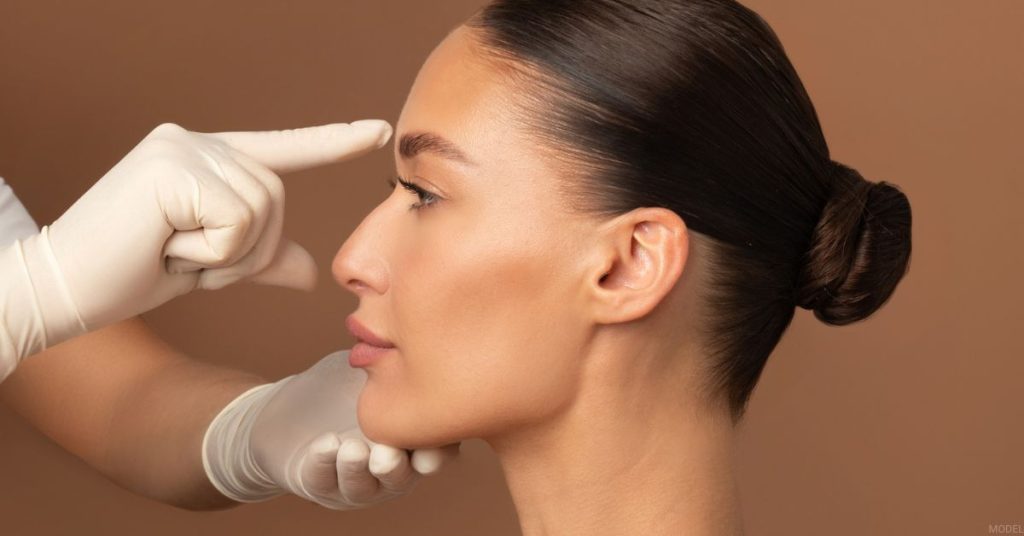
Why this is important: A thorough evaluation of your nasal anatomy and overall facial balance allows your surgeon to create results that look refined, natural, and proportionate.
During your consultation, your surgeon assesses features such as:
- Nasal bones and cartilage strength
- Tip projection and support
- Profile balance and chin–nose proportions
- Internal structures that affect airflow
- Skin thickness, which influences how changes appear externally
Combining this assessment with your goals helps your surgeon design a surgical plan that complements your facial features rather than overpowering them.
Surgical Technique
Main question to ask: Should I have a closed or open rhinoplasty?
Why this is important: Choosing the correct method is essential for a safe procedure and a smooth, predictable result. The right technique, closed or open rhinoplasty, depends on the type and extent of changes you need.
- Closed rhinoplasty places incisions within the nostrils.
- Open rhinoplasty uses a small incision on the columella, providing the surgeon with greater visibility.
Many of my primary rhinoplasty patients are excellent candidates for the closed approach, as it allows your surgeon to refine the nose without external scarring. However, some cases require the open technique for greater structural access.
Rhinoplasty Results & Expectations
Main question to ask: What results can I realistically expect?
Why this is important: Setting clear, informed expectations helps ensure a positive experience. When I meet with a prospective patient, for example, I evaluate what can be achieved based on their anatomy, goals, and skin characteristics. I also use tools such as 2D imaging to help them visualize their potential outcome.
A well-executed rhinoplasty shouldn’t look “done.” Instead, your nose should feel proportional, balanced, and harmonious with the rest of your features. When you understand the possibilities and limitations upfront, you’ll feel more confident both before and after surgery.
Recovery & Logistics
Main question to ask: What is recovery like, and when will I see results?
Why this matters: Understanding the recovery timeline helps you plan time off, manage expectations, and support proper healing. Most people return to work or school within 1 to 3 weeks, but swelling may take time to fully resolve, especially at the nasal tip. You’ll see meaningful changes within the first few months, and final refinement often appears between 6 and 12 months.
Key recovery points to discuss include:
- Whether nasal packing is used
- How long you’ll wear a splint
- When you can resume exercise
- How long swelling and congestion may last
Preparing early—especially by arranging help, stocking recovery items, and planning your schedule—can make the process much smoother.


Question To Ask if You’re Considering Revision Rhinoplasty
Main question to ask: What is your experience with revision rhinoplasty?
Why this is important: While most patients achieve their desired result with primary surgery, revision rhinoplasty becomes necessary for some. If this applies to you, ask your prospective surgeon about their experience with revisions, as secondary procedures require heightened precision and structural expertise.
Ready To Take the Next Step?
If you’re considering rhinoplasty, I’m here to guide you through every step and help you achieve results that feel natural and balanced. I invite you to call my office today at (818) 500-0823 or request a consultation using the online form.
Leave a Reply