Alexander Fost, a So You Think You Can Dance Season 8 finalist, lived with insecurity about his nose for most of his life before deciding to pursue rhinoplasty with double board-certified plastic surgeon Dr. Armen Vartany in Burbank. In 2017, the same year he took on Alexander’s case, Dr. Vartany was honored in the Artisan Series for his rhinoplasty expertise. He has since performed more than 3,000 rhinoplasty procedures and continues to perform roughly 200 nose jobs each year.
This article follows Alexander’s real rhinoplasty journey through his own footage, from the night before surgery to his final reveal, offering a realistic look at what rhinoplasty involves from a patient’s perspective.
Whether you’re still deciding if rhinoplasty is right for you or you already have a consultation scheduled at Armen Vartany, MD, FACS, Plastic Surgery & Laser Center, keep reading for a helpful reference on what the weeks ahead will look like.
What Happens the Day Before Rhinoplasty Surgery?
The day before rhinoplasty surgery is mostly about final preparation, both practical and emotional. Patients typically confirm their surgical plan, review fasting instructions, and arrange for a friend or family member to drive them to and from the practice and stay with them for the first 24 hours.
At our Burbank practice, that final pre-op conversation builds on the 3D imaging patients review during their initial consultation, so by the day before surgery, there are no surprises about what the surgical plan is meant to accomplish. For Alexander, that meant one more chance to talk through his goals with Dr. Vartany before the procedure that would address a self-consciousness he’d carried for years.
Most patients spend the day before rhinoplasty surgery on the same short list of tasks:
- Reviewing the surgical plan and preoperative instructions
- Filling any prescriptions in advance
- Gathering pillows to sleep propped up during early recovery
- Freezing bags of peas or corn for cold compresses in the first 48 hours
- Arranging a ride and a support person for the first 24 hours after surgery
It’s a practical checklist, but for most rhinoplasty patients, the night before surgery is as much about settling nerves as it is about logistics. Alexander’s video captures that mix of anticipation and vulnerability that’s common the night before any surgery.
What Happens on the Day of Rhinoplasty Surgery?
On the big day, you’ll arrive at our outpatient surgery center, where your surgical team will prep you and place you under general anesthesia. You’ll undergo the rhinoplasty procedure, and then recover under observation before heading home.
Here’s an overview of what surgery day typically involves at Dr. Vartany’s practice:
- Technique: Dr. Vartany uses a closed approach for about 90% of rhinoplasty patients. Incisions are made entirely inside the nostrils, leaving no visible external scar. More complex revision rhinoplasty cases typically call for an open approach rather than a closed technique, which gives more direct access to the underlying cartilage and bone.
- Anesthesia: You’re placed under general anesthesia for the procedure.
- No nasal packing: Unlike many traditional rhinoplasties, Dr. Vartany doesn’t use nasal packing, which many perceive as a dreaded part of the recovery process. As a result, our patients are frequently surprised that discomfort afterward is milder than they expected.
- Recovery room: You’ll be monitored in the recovery room before going home, where the first hours of healing begin.
Alexander’s video shows that process in real time: arrival, the procedure itself, and his thoughts on the value of investing in his confidence and appearance through rhinoplasty.
What Is Recovery Like the First Week After Rhinoplasty?
Rhinoplasty recovery time in the first week centers on managing swelling and bruising, sleeping with the head elevated, and keeping the protective splint in place until it’s removed at the one-week follow-up appointment.
Here’s a general overview of what our patients can expect during the initial weeks of healing:
- First 48 hours: Ice the eyelid area to manage swelling and bruising.
- Around day 7: The splint comes off at the first post-op visit.
- First 2 weeks: Sleep upright on pillows or in a recliner to keep the head elevated.
- First 10 days: Avoid blowing your nose.
- 1 to 3 weeks: Time off work or school, depending on visible bruising and personal comfort.
For many patients, splint removal is an emotional milestone; it’s the first time they see their new nose without the surgical dressing. That’s exactly the moment captured in Alexander’s cast-removal footage.
It’s worth noting that some postsurgical swelling is completely normal at this stage. Immediately after the splint is removed, the nose often looks fuller than the final result will, and that’s not a cause for concern.


When Do Rhinoplasty Results Become Visible?
Rhinoplasty results become visible gradually: Most of the noticeable swelling resolves within the first 3 weeks, but subtler swelling, especially at the tip, can take up to a full year to completely settle into the final shape.
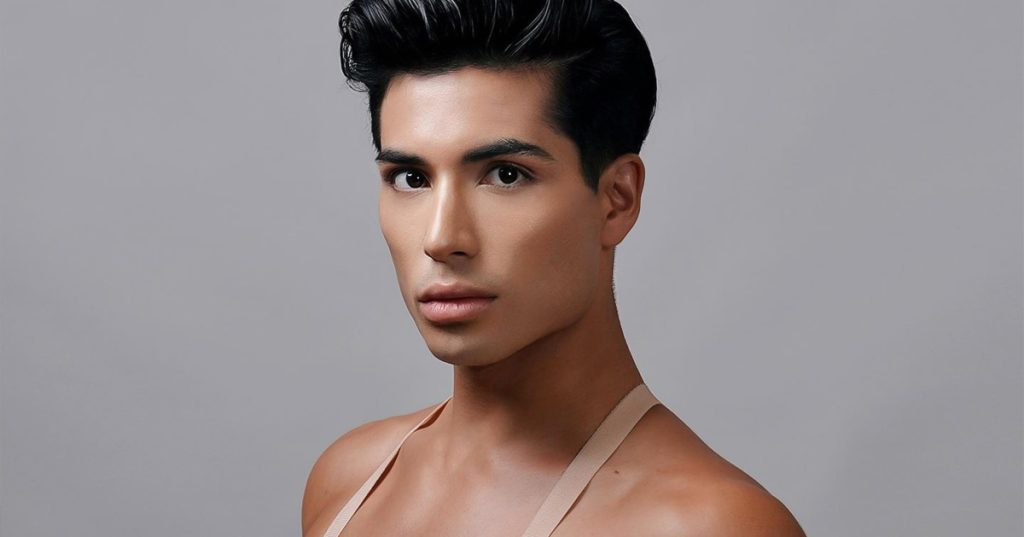
By the time Alexander was ready for his postsurgical photoshoot, his nose had progressed well into that healing timeline, with the dramatic early swelling behind him and a more refined shape emerging.
Other recovery milestones fall into place around the same stage:
- Approximately 2 weeks: Nonstrenuous exercise can typically resume.
- 4 to 6 weeks: More strenuous, noncontact activity is usually cleared.
- Approximately 8 weeks: Glasses can be worn again, once the bridge has stabilized enough to support the frames.
- Up to 1 year: Residual tip swelling continues to refine the final shape.
Throughout the process, Dr. Vartany’s aesthetic goal for you isn’t a dramatically different nose; it’s one that looks proportionate and natural in harmony with your other features. Alexander’s photoshoot results reflect that philosophy: a refined nose that enhances his overall look rather than an obvious surgical change.
Watch Alexander’s Full Rhinoplasty Journey
View Alexander’s entire rhinoplasty journey, from start to finish, below.
Watched together, his rhinoplasty journey reflects the earnest anticipation beforehand, the procedure itself, the vulnerable early recovery, and the confidence that came with Alexander finally seeing results he’d wanted for years.
For a public figure like Alexander, choosing to document that process at all—insecurities included—says something about how much the outcome meant to him. Most rhinoplasty patients don’t put their journey on camera. Still, the emotional arc is the same one Dr. Vartany sees in his practice every week: a sense of nervousness beforehand, vulnerability in the early days of recovery, and, for the vast majority of patients, real satisfaction once the swelling settles and the final result comes into focus.
What Alexander’s Experience Can Tell You About Rhinoplasty
If you’re researching rhinoplasty in Los Angeles or Burbank, Alexander’s story is a realistic preview of what to expect at each stage. However, the specifics of your own case, such as your anatomy, goals, and ideal outcome, deserve a conversation of their own.
Dr. Vartany’s rhinoplasty expertise includes complex revision rhinoplasty cases for patients unhappy with results from another surgeon, nasal tip plasty for isolated tip concerns, and ethnic rhinoplasty that respects each patient’s unique features and heritage. Every consultation includes 3D imaging so you can see a preview of your own potential results before committing to surgery, the same process that helped shape Alexander’s outcome.
You can also browse more rhinoplasty before-and-after photos to see the range of results Dr. Vartany’s patients have achieved.
Why Choose Dr. Vartany as Your Rhinoplasty Surgeon?
Here’s what sets Dr. Vartany apart as a leading rhinoplasty specialist:
Double board-certified
Certified by the American Board of Plastic Surgery and the American Board of Surgery. He is a Fellow of the American College of Surgeons and a member of the prestigious American Society of Plastic Surgeons.
Rhinoplasty-focused experience
Rhinoplasty has one of the highest revision rates in plastic surgery when performed by a surgeon without dedicated nasal experience. Dr. Vartany’s advanced training and high volume of procedures, including complex and revision cases, make him a sought-after choice for patients seeking specialized rhinoplasty expertise.
Accredited surgical facility
Dr. Vartany performs all surgeries at his own state-of-the-art outpatient surgery center located at his Burbank practice. The surgery center is fully accredited by The Joint Commission, and Dr. Vartany personally selected the center’s anesthesiologists and nurses specifically for outpatient surgical care.
Patient-focused care
Consultations take place at our boutique Burbank practice, which emphasizes concierge-level, personalized attention with individually tailored surgical plans.
This combination of expertise and care is why patients travel from throughout the greater Los Angeles area to Burbank specifically to have their rhinoplasty performed by Dr. Vartany. His reputation is further evidenced by positive 5-star patient reviews from those who have benefited from his treatment and care.
FAQs About Rhinoplasty Surgery
Will rhinoplasty leave a visible scar?
Not typically. Dr. Vartany performs closed rhinoplasty, with incisions hidden inside the nostrils, for about 90% of his patients. Open rhinoplasty, used for more complex cases, leaves a small scar on the columella that fades over time.
Who is a good candidate for rhinoplasty?
Good candidates are nonsmokers in good general health with realistic expectations about their results. The nose must also be fully developed, which typically occurs by ages 15 to 17.
Does rhinoplasty hurt?
The procedure itself doesn’t hurt because you are placed under anesthesia, and many patients are surprised by how manageable their postsurgical discomfort is. Dr. Vartany doesn’t use nasal packing, which most patients find to be the most uncomfortable part of a traditional rhinoplasty recovery.
Can rhinoplasty be combined with other procedures?
Yes. Rhinoplasty is sometimes paired with eyelid surgery, a brow lift, or a facelift for appropriately selected patients who want to address multiple areas of the face at once. Nonsurgical treatments like dermal fillers or BOTOX® may also complement rhinoplasty results as part of a comprehensive treatment plan.
How much does rhinoplasty cost in the Los Angeles area?
Cost depends on the surgeon’s experience, the surgical facility, and the specific changes involved. Dr. Vartany’s practice provides a detailed price quote after your consultation, and financing options are available for qualified patients.
Ready To Start Your Own Rhinoplasty Journey?
Alexander’s story shows what a true rhinoplasty patient experience is like from start to finish at Dr. Vartany’s practice, but each patient’s anatomy and goals are unique.
Request a consultation with double board-certified surgeon Dr. Vartany at his Burbank practice to talk through your own options, view 3D imaging of your potential results, and get a personalized recovery timeline before you decide. Complete the online form or call (818) 500-0823 to get started.
Leave a Reply